Sunpath Atlas From Contract Signature to Power-On: Home Solar Panel Install Phases in Order

Ten mapped phases. One steady pace. Know what happens, how long it usually takes, and when to call your installer.

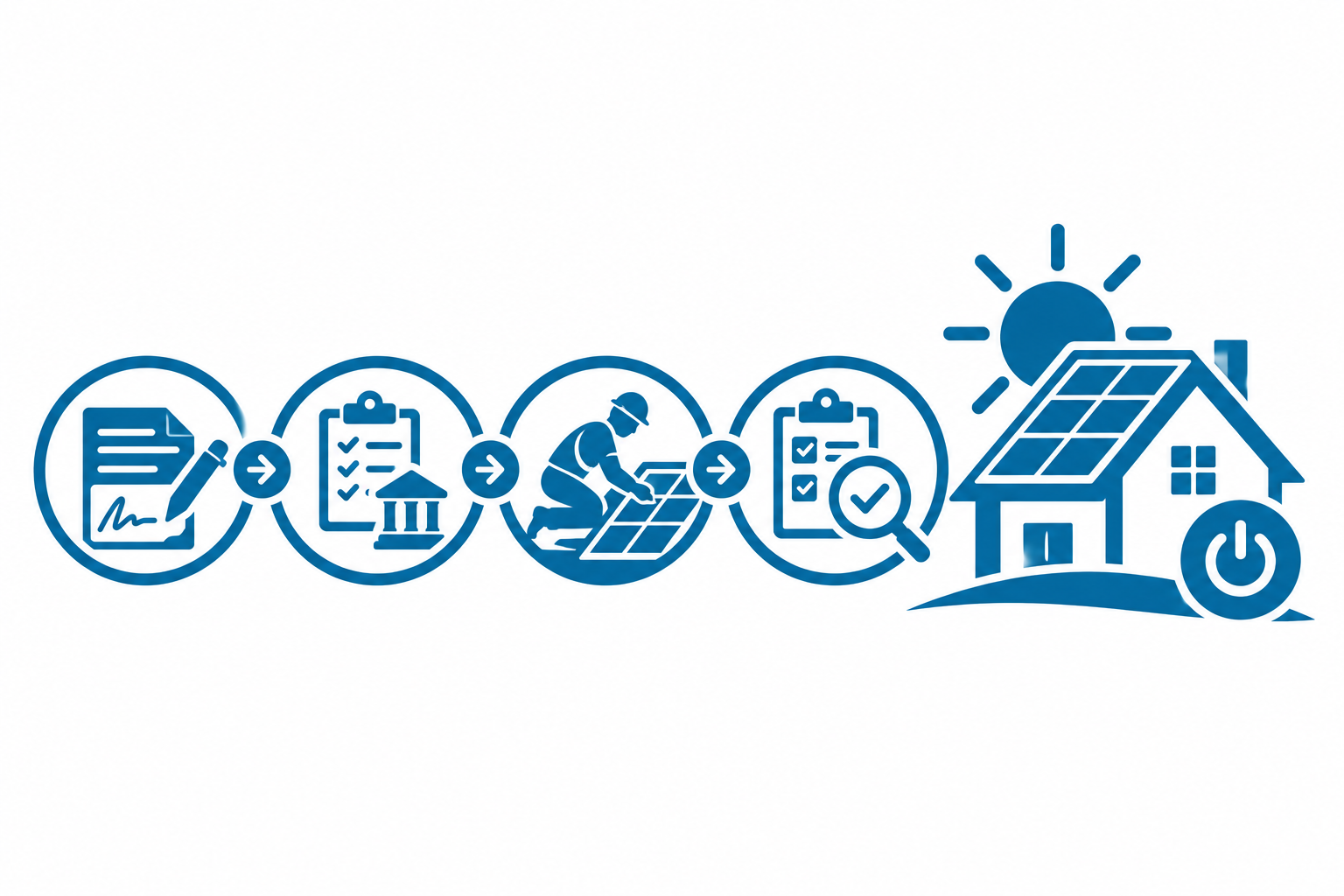
We break residential solar into a clear sequence — contract and survey, approvals, roof work, in-home equipment, inspection, connection, and handover. Short guides, no filler, no sales pitch.

Learn More

Early Phases: Contract, Waiting, and Roof Work

The first stretch sets expectations. Paperwork comes first, then quiet weeks, then visible progress on the roof.

1

Phase 1 — Contract and Site Survey

Your installer confirms roof layout, electrical panel location, and shading. The contract should list equipment classes, timeline ranges, and who pulls permits. Ask what triggers a redesign before you sign — a tree that grew since the quote or a panel upgrade can shift the plan.

2

Phase 2 — The Waiting Window

Permits and utility paperwork often move slower than roof crews. During this stretch, little visible work happens at your home. Keep a log of submission dates and reference numbers. If silence stretches beyond what your contract describes, one polite follow-up to your project coordinator is reasonable.

3

Phase 3 — Roof: Panel Mounting

Flashing, racking, and modules appear on the roof. Licensed crews handle fall protection and structural attachments. You may hear drilling and see conduit runs toward the attic or exterior wall. Walk the yard afterward and note any loose debris — most teams sweep, but a quick check protects pets and tires.

Mid Phases: In-Home Equipment and Pre-Activation Inspection

Work moves indoors. Wiring and inverter placement matter as much as what sits on the roof.

4

Phase 4 — Inverter and Interior Wiring

The inverter usually lands on a garage wall or utility area with clearance for airflow and future service. Electricians run conduit, install disconnects, and label circuits. Ask where monitoring equipment will live and whether your Wi-Fi reaches that spot — many systems need a stable network signal from day one.

5

Phase 5 — Inspection Before Power-On

A local inspector or third-party reviewer checks mounting, grounding, and labeling against code. Failures are common and fixable — a missing placard or conduit support should not panic you. Your installer schedules the revisit. System power stays off until this phase clears.

Late Phases: Connection, Handover, and First Week

Utility permission arrives, paperwork closes, and production begins under real household load.

6

Phase 6 — Utility Connection and Permission to Operate

The utility may swap your meter or approve a bidirectional unit. Permission to operate is the official approval to begin production. Until then, enabling the system yourself creates safety and warranty problems. Wait for written confirmation from both your installer and the utility.

7

Phase 7 — Handover Walkthrough

The crew walks you through shutdown steps, monitoring login, and warranty folders. Photograph serial numbers and store digital copies. Clarify who handles monitoring alerts and how long response times run under your agreement.

8

Phase 8 — First Week of Operation

Production curves look jagged at first — clouds, partial shade, and morning angle all show up in the app. Compare day-to-day trends, not single hours. A sudden flat line across a sunny afternoon deserves a call; a dip during an afternoon storm does not.

How Readers Use Our Phase Framework

These figures reflect editorial reach and reader feedback — not performance warranties or output forecasts.

0 Documented Install Phases
0 Reader Inquiries Answered
0 States Referenced in Guides
0 Published Deep-Dive Articles

Counts updated from editorial records and contact logs. Individual homes follow different timelines — use these numbers as context, not forecasts.

Latest Phase Guides

Two recent articles that walk through early milestones homeowners ask about most.

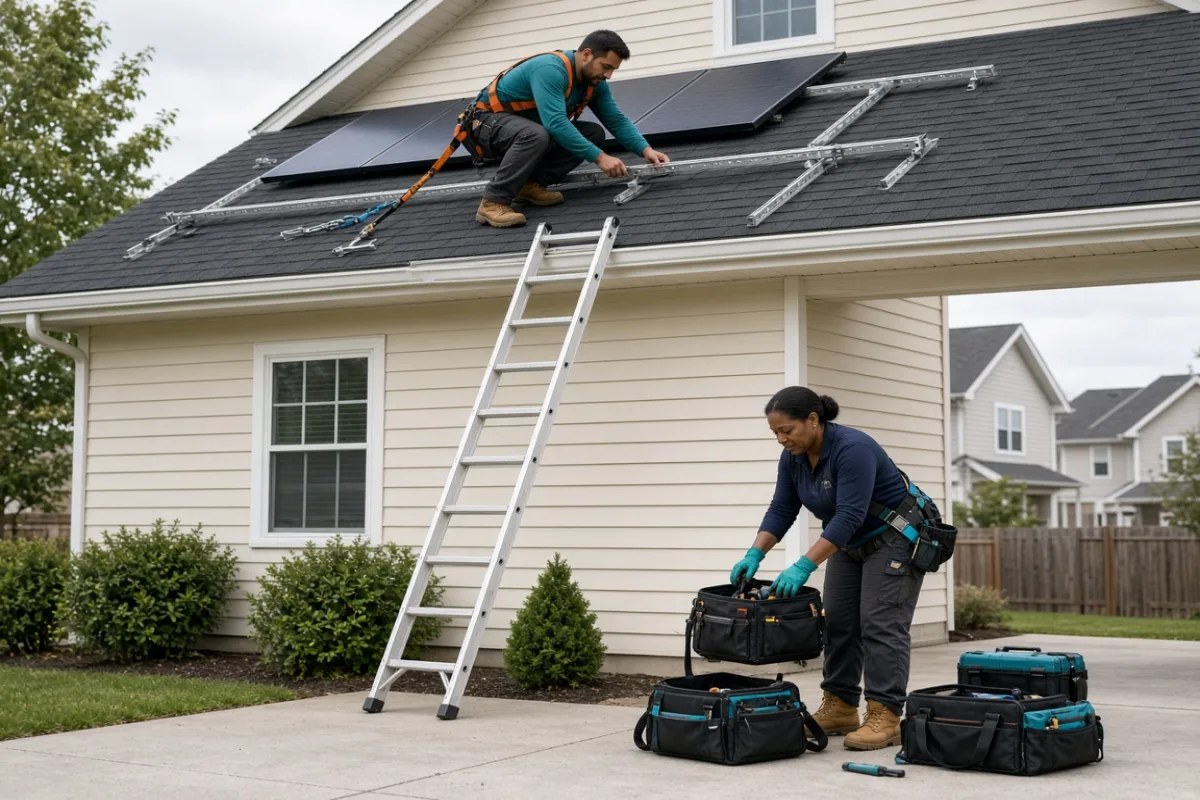
Solar crew installing panels on a suburban roof with safety gear in the driveway
5 min read

Roof Mount Day: What Happens On Site

James Whitfield

Noise, staging, and partial installs confuse homeowners who expected a single quiet morning. We walk through a typical mount day so you know what normal looks like from the ground.

Read Article

Reader Experiences

Homeowners who used our phase labels to follow their own installs.

Phase labels stopped the guessing. When permits stalled in Phase 2, I knew the delay was paperwork — not a forgotten crew. I called once with the permit number ready and got a clear answer the same afternoon.

Marcus Reid

Middle School Teacher, Portland

Rating: 5 out of 5 stars
The handover checklist in Phase 7 matched what my installer covered — shutdown steps, monitoring login, warranty PDFs. I caught a missing placard photo before the crew left, which saved a second inspection trip.

Sandra Liu

Registered Nurse, Raleigh

Rating: 5 out of 5 stars
First-week production looked uneven until I read Phase 8 notes about morning angle and afternoon clouds. I stopped refreshing hourly and watched weekly trends instead — much less stress.

Daniel Kowalski

Architectural Drafter, Tucson

Rating: 4 out of 5 stars

Unsure Which Phase You Are In?

Tell us where your project paused — waiting on permits, mid-roof, or pre-inspection — and we will point you to the right guide and questions to ask your installer.

Contact Us

Our mission is to give homeowners a shared vocabulary for residential solar installs. We document what each phase looks like, what usually comes next, and when licensed specialists must step in — so you can follow progress without copying someone else's timeline.

Important Information

Sunpath Atlas provides educational materials about residential solar install phases. Content on this site is meant to help you understand how projects typically progress and what questions to ask along the way.

We are not a solar installation company. We do not mount panels, schedule crews, or book roof work on your behalf. We do not sell solar panels, inverters, batteries, or related hardware, and we do not compare brands or models.

We do not publish cost forecasts, utility bill projections, or site-specific energy output figures. Every roof, utility territory, and household load profile differs. Incentive programs, interconnection rules, and tariff structures change — verify current requirements with your state energy office and local utility before making decisions.

Grid interconnection, work inside your electrical panel, and structural roof assessments must be handled by appropriately licensed professionals. Do not perform grid tie-in, breaker changes, or structural modifications yourself unless you hold the required credentials.

You remain responsible for choices about system size, contractor selection, and project timing. Materials here are not a substitute for on-site evaluation by qualified experts. Each home moves through phases at its own pace — do not treat another homeowner's schedule as a template for yours.

Consult licensed installers, electricians, and local authorities for decisions that affect safety, code compliance, and warranty coverage.