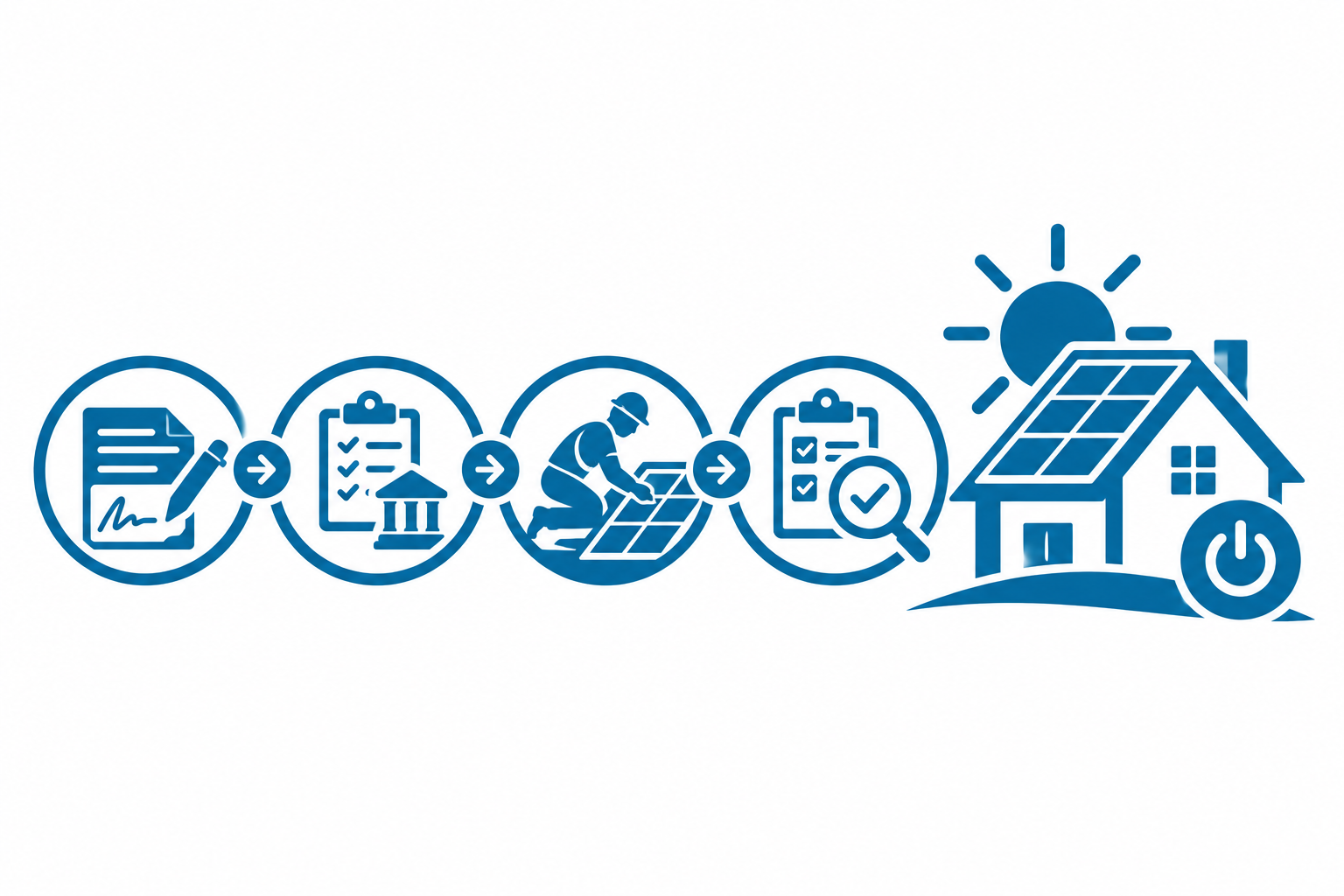
Why We Map Solar Installs as Ten Phases
Sunpath Atlas started with a simple frustration: homeowners could not tell whether silence meant progress, paperwork, or a forgotten step.
We are an editorial project — not a crew on your roof. Our job is to name what happens, in what order, and who owns each task so you can follow your project without guessing.

How Sunpath Atlas Began
A homeowner question turned into a shared vocabulary for installs nationwide.
The idea took shape after repeated messages from readers who had signed contracts but could not decode installer updates. One week the email said permits; the next said scheduling; the roof still looked untouched. Without phase labels, every delay felt like failure.
We chose residential solar because the sequence is repeatable even when timing is not. Contract, survey, approvals, roof work, in-home equipment, inspection, utility permission, handover — the order holds across most markets even when local rules differ.
Sunpath Atlas does not replace your installer. We give you language to ask sharper questions: which phase you are in, what document is pending, and whether the next visit requires your presence or just patience.
Our name reflects the path from first signature to first production — mapped like coordinates on an atlas, not promised as a race. Every home moves at its own pace; the phases stay the same even when the calendar does not.

How We Research and Verify
Each phase guide begins with installer interviews, homeowner surveys, and public documents — permit checklists, utility interconnection PDFs, and inspection bulletins where they are posted online. We trace what must happen before power-on, not what sales materials describe afterward.
Drafts pass through a two-step review. First, a technical reader checks sequence logic: can this step happen before that one? Second, a plain-language editor removes jargon and flags claims we cannot support — especially around timelines, production, and equipment comparisons.
When rules differ by state or utility territory, we say so explicitly and point readers toward official sources rather than inventing a single national answer. Updates land when interconnection forms change or when reader reports show a phase description no longer matches field practice.
How We Answer Your Phase Question
When you write in, we locate your stall point and return context — not a crew dispatch.
-
Identify the active phase
You tell us what last happened on site and what you last heard from your coordinator. We match that snapshot to our phase map — waiting on permits is Phase 2; a passed inspection with the system still off is Phase 5 or 6 depending on utility status.
-
List what usually comes next
We outline the typical next milestone and the document or visit that unlocks it. If your contract mentions a different sequence, we note that installer agreements can reorder sub-steps even when the broad phases stay constant.
-
Flag normal waiting periods
Quiet weeks are common during approvals. We distinguish between expected processing time and gaps that warrant a logged follow-up — missing permit numbers, unsigned interconnection forms, or inspection failures without a scheduled revisit.
-
Point to licensed work when required
If your question crosses into panel work, roof loading, or grid tie-in, we stop at the boundary and name the credential holder who must act. We do not troubleshoot live equipment or interpret code on your specific home from email alone.
Where Our Role Ends
Clear lines keep homeowners safe and expectations honest.
We publish phase guides
Sunpath Atlas documents what each install stage looks like from the homeowner side — paperwork, visits, inspections, and handover items. We explain vocabulary installers use and help you prepare questions before calls.
We do not mount equipment
No roof crews, no inverter sales, no scheduling on your behalf. We never compare hardware brands or publish site-specific output forecasts. Choosing an installer and system size remains your decision with qualified on-site input.
Roof and panel work stays licensed
Structural attachments, flashing, and module mounting require tradespeople with appropriate credentials and insurance. Our guides describe what you may observe from the ground — not how to perform the work yourself.
Electrical tie-in stays licensed
Work inside your service panel, disconnect placement, and utility meter coordination belong to qualified electricians and the utility itself. We explain Permission to Operate as a milestone; we do not instruct you to energize systems early.
Partners extend our reach — they never replace our editorial independence. We cite them when they publish primary sources, not when they want a sales funnel.
How We Select Reference Partners
Sunpath Atlas occasionally links to training academies, local building departments, and nonprofit energy educators when their materials help readers verify phase requirements. These relationships are informational, not commercial. We do not accept payment for placement in guides.
Fictional examples of the types we reference include the Mountain West Energy Education Cooperative, the Grid Readiness Public Library Series, and regional permit transparency projects run by municipal building offices. Each must publish checklists or forms homeowners can cross-check themselves.
- Primary documents preferred — interconnection PDFs, inspection bulletins, permit fee schedules with official letterhead.
- No partner may require account creation, paid subscription, or equipment purchase to access the cited material.
- We remove links when sources go stale, paywall primary forms, or drift into equipment marketing.
Tell Us Which Phase Has You Stuck
Share what last happened on your project and we will point you to the matching guide plus sensible questions for your installer or utility.
Read the Phase Guides
Four in-depth articles cover contract survey, roof mount day, utility permission, and stalled phases — each written for homeowners watching work from the ground.
Important Information
Sunpath Atlas provides educational materials about residential solar install phases. Content on this site is meant to help you understand how projects typically progress and what questions to ask along the way.
We are not a solar installation company. We do not mount panels, schedule crews, or book roof work on your behalf. We do not sell solar panels, inverters, batteries, or related hardware, and we do not compare brands or models.
We do not publish cost forecasts, utility bill projections, or site-specific energy output figures. Every roof, utility territory, and household load profile differs. Incentive programs, interconnection rules, and tariff structures change — verify current requirements with your state energy office and local utility before making decisions.
Grid interconnection, work inside your electrical panel, and structural roof assessments must be handled by appropriately licensed professionals. Do not perform grid tie-in, breaker changes, or structural modifications yourself unless you hold the required credentials.
You remain responsible for choices about system size, contractor selection, and project timing. Materials here are not a substitute for on-site evaluation by qualified experts. Each home moves through phases at its own pace — do not treat another homeowner's schedule as a template for yours.
Consult licensed installers, electricians, and local authorities for decisions that affect safety, code compliance, and warranty coverage.