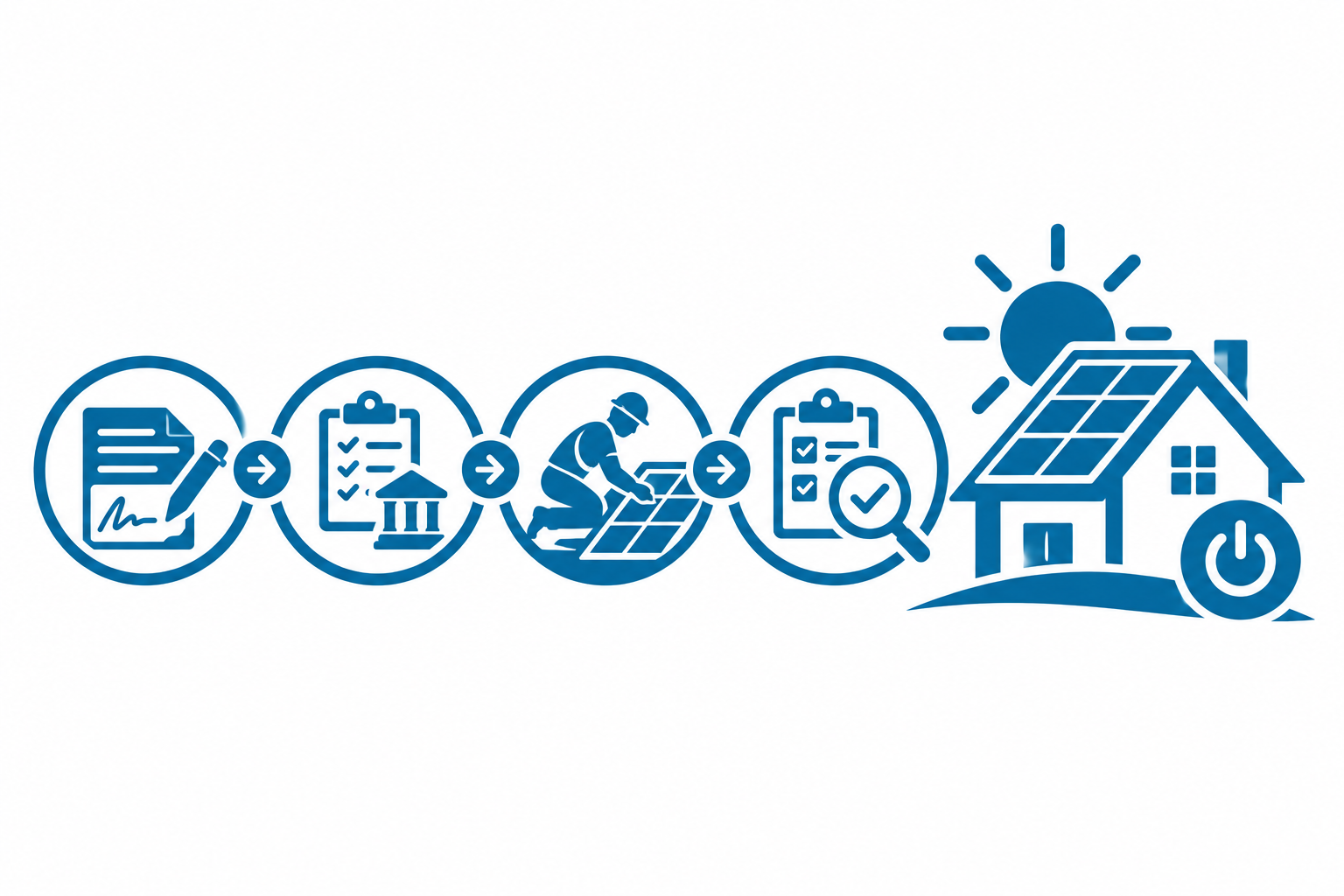
The survey fixes roof zones, conduit paths, main panel location, and equipment placement assumptions. Your contract should list who pulls permits and what triggers a redesign if shading or roof conditions differ from the quote.
Contact Sunpath Atlas
Write to us when you need help naming the phase you are in or preparing questions for your installer or utility.
We handle questions about contract and survey items, permit waiting, roof visits, in-home wiring, inspections, utility permission, handover, and stalled timelines. We do not dispatch crews or sell equipment.
Send a Message
Common Phase Questions
Short answers before you write in. Expand any item for detail.
Phase 2 is often paperwork — municipal permits, utility interconnection forms, and scheduling backlogs. Silence at the house does not always mean the project stopped. Keep submission dates and reference numbers so you can ask a focused follow-up.
Expect staging, drilling, and conduit runs — often louder and longer than a single morning. Partial installs are normal if weather or inspection timing splits the visit. Licensed crews handle fall protection; your role is keeping driveway access clear.
Electricians mount the inverter, run conduit, install disconnects, and label circuits. Ask where monitoring hardware will sit and whether your network reaches that location. This phase may finish before or after roof work depending on crew scheduling.
An inspector or approved reviewer checks mounting, grounding, labeling, and disconnect placement against code. Minor failures are common and fixable. Production stays off until this phase clears — energizing early creates safety and warranty issues.
After inspection, the utility may swap or configure your meter and issue Permission to Operate. Wait for written confirmation from both your installer and the utility before assuming the system is live. Enabling the system yourself is not a shortcut.
No. We publish phase guides and answer editorial questions. We do not mount panels, sell hardware, or schedule crews. Roof work and panel work must be performed by appropriately licensed tradespeople in your area.
Work inside your electrical panel and grid interconnection must be handled by qualified electricians and your utility. Our materials explain milestones — they are not a substitute for on-site evaluation.
Office Location
Our editorial team is based in Denver. Mail and meeting requests should use the address below — the same location shown in the site footer.
Important Information
Sunpath Atlas provides educational materials about residential solar install phases. Content on this site is meant to help you understand how projects typically progress and what questions to ask along the way.
We are not a solar installation company. We do not mount panels, schedule crews, or book roof work on your behalf. We do not sell solar panels, inverters, batteries, or related hardware, and we do not compare brands or models.
We do not publish cost forecasts, utility bill projections, or site-specific energy output figures. Every roof, utility territory, and household load profile differs. Incentive programs, interconnection rules, and tariff structures change — verify current requirements with your state energy office and local utility before making decisions.
Grid interconnection, work inside your electrical panel, and structural roof assessments must be handled by appropriately licensed professionals. Do not perform grid tie-in, breaker changes, or structural modifications yourself unless you hold the required credentials.
You remain responsible for choices about system size, contractor selection, and project timing. Materials here are not a substitute for on-site evaluation by qualified experts. Each home moves through phases at its own pace — do not treat another homeowner's schedule as a template for yours.
Consult licensed installers, electricians, and local authorities for decisions that affect safety, code compliance, and warranty coverage.